This paper argues that intelligence is an emergent adaptive capability arising from the interaction within the human−machine−environment system. It encompasses quantifiable computationality and context−dependent calculative rationality, which together constitute the dual nature of computationality and calculative rationality. By comparing the social interactive generative mechanism of human intelligence, the finiteness of mathematical tools, and the dynamic balance of intelligence between situation awareness (computating) and positional sensemaking (calculating), this paper reveals that intelligence is a characteristic transcending pure technology. Its essence lies in the integration of facts and values within complex systems: it not only relies on physical carriers, but also embodies the potentiality of "creation out of nothing" as advocated in Eastern philosophy, and ultimately points to the dialectical unity of scientific methodologies and complex system theories.
Biomanufacturing is increasingly recognized as a pivotal engine for global economic growth, with its strategic significance being emphasized by major economies worldwide. In this article, the conceptual connotation of biomanufacturing is systematically examined, followed by a comprehensive analysis of the international competitive landscape through the dual lenses of scientific and technological advancement and strategic policy frameworks. It also summarizes China's progress in scientific and technological achievements, innovation platforms, and industrial development. Four critical challenges confronting China's biomanufacturing sector are identified: 1) underdeveloped innovation capabilities in foundational generic technologies; 2) sustainable and low−cost feedstock sources remain inadequately explored; 3) systemic deficiencies and import dependencies persist in biomanufacturing equipment; and 4) shortage of interdisciplinary industrial talent is observed. To address these constraints, strategic recommendations aligned with national strategic needs (e.g., food security, energy security) are proposed. Through coordinated policy interventions and technological modernization, the following actions should be prioritized: basic research should be intensified to foster original innovation; breakthroughs in core proprietary technologies should be systematically pursued; commercialization of scientific and technological achievements ought to be accelerated and a diversified talent cultivation ecosystem needs to be established. Collectively, these measures are expected to furnish the scientific and technological foundation necessary for high−quality, resilient advancement of China's biomanufacturing sector.
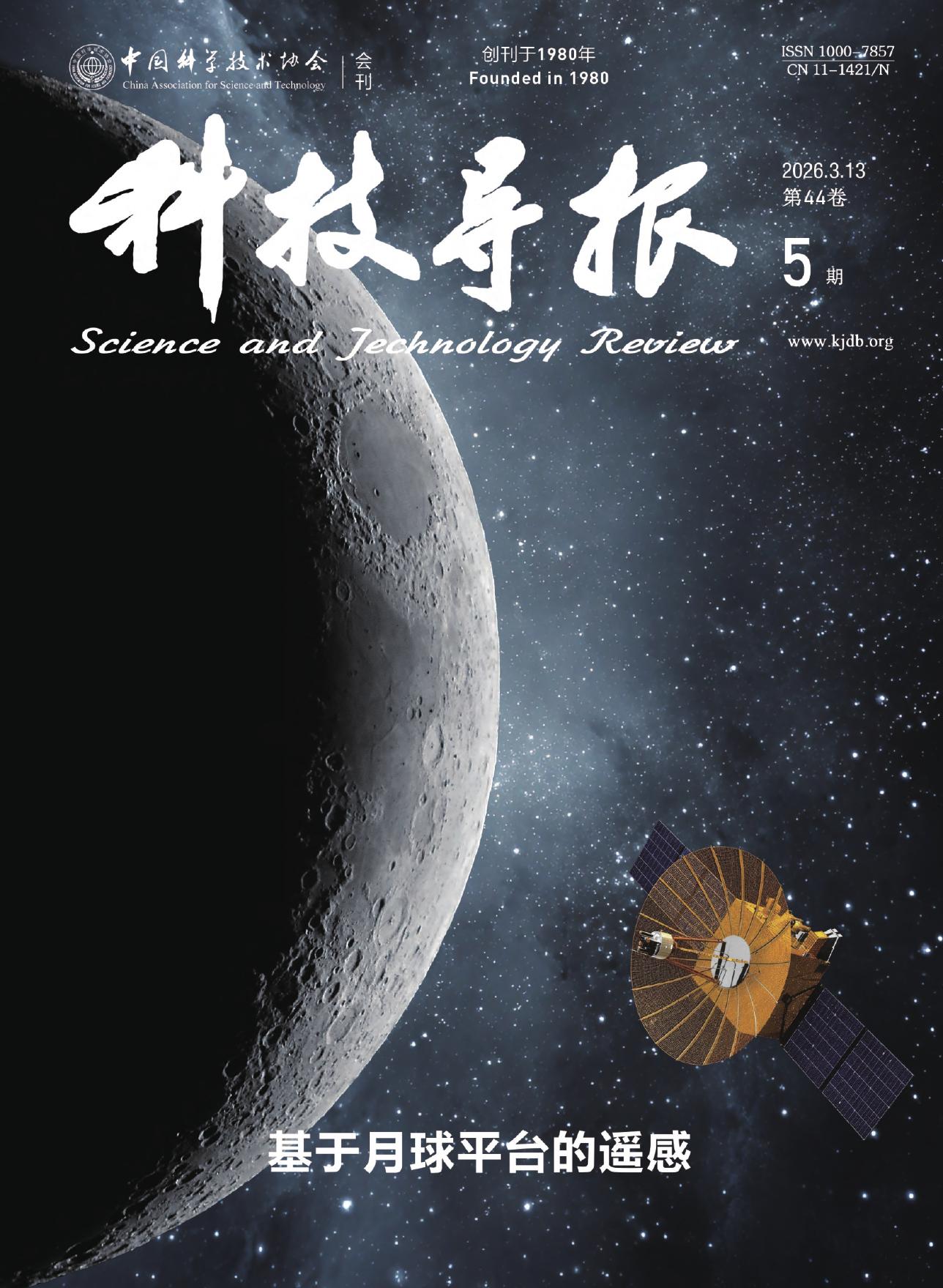
Earth's space environment is crucial for space activities and technology. Continuous monitoring and research are vital. Traditional methods rely on ground−based observatories and satellites with limitations. Lunar exploration advances have made Moon−based remote sensing of Earth's space environment an emerging approach. This paper reviews relevant research progress, including lunar observation platforms, remote−sensing tech, applications, challenges, and future directions. Moon−based observation offers long−term continuity, global coverage, a unique perspective, and a stable platform. It has great potential in space weather monitoring, Earth space environment change research, and planetary science comparisons. As lunar exploration tech develops, Moon−based remote sensing will increasingly contribute to understanding Earth's space environment, ensuring space activity safety, and exploring cosmic mysteries.
The Moon is a key celestial body that records the formation and evolution of the solar system. The composition and characteristics of the lunar surface are the core of planetary science. Visible and near−infrared reflectance specrtroscopy has become the most effective technique for investigating the Moon's surface material composition and characteristics because of its advantages of wide coverage, sensitivity to changes in mineralogy, and minimal environmental impact. It has been widely adopted in many lunar exploration missions both domestically and internationally. In this study, we provided a detailed introduction to the remote sensing spectroscopy payloads and their performance carried by representative lunar exploration missions since the 20th century. We also summarized the scientific achievements of these payloads, covering aspects such as the global iron and titanium content, the composition of the lunar crust and mantle, the content and distribution of lunar surface water, as well as the maturity and optical properties of lunar regolith. Considering the technical features of these payloads and the needs of future scientific research, several development suggestions for future lunar remote sensing spectroscopy were provided including expanding the spectral range of detection, improving the spatial resolution, number of bands, and signal−to−noise ratio of payloads, and developing remote sensing data analysis methods based on "ground truth" of returned samples and artificial intelligence algorithms. These can serve as references for the design of future lunar remote sensing payloads.
This paper reviews the evolution, current status, and future prospects of lunar−based astronomical observations. It elaborates on the advantages of lunar−based platforms over other observation platforms, including immunity to Earth's atmospheric interference, extended continuous observation timelines, and stable, expansive construction spaces. The development history of lunar−based astronomical observations is traced, from the first brief manual far−ultraviolet observations during the US Apollo 16 mission in the 1970s, to the first long−term unmanned near−ultraviolet observations achieved by China's Chang'e−3 mission in the 2010s, and to the present era where multiple lunar−based observation programs are developing concurrently and competitively, aiming for large−scale, ultra−high precision, and ultra−long−term continuous stable operations. The opportunities and challenges facing lunar−based astronomical observations are analyzed, and their future development prospects are discussed. This review aims to serve as a reference for research in the field of lunar−based astronomical observations.
Human lunar exploration activities are undergoing a historic transition from technological verification to a dual focus on scientific discovery and resource exploitation. The development and utilization of Earth−Moon space resources has become a strategic high ground in global space competition, prompting major spacefaring nations to actively position themselves in this strategic domain. This paper examines the material, positional, and environmental resource characteristics of Earth−Moon space, analyzing the synergistic value of material resources (including lunar regolith, water ice, and minerals) and positional resources (such as frequency and orbital slots) within integrated systems for communication, navigation, remote sensing, transportation, and in−situ resource utilization. The maturation of in−situ resource conversion/manufacturing technologies, space−Earth integrated information backbone networks, and reusable transportation systems will provide robust support for cultivating new productive capacities, reshaping deep space exploration paradigms, and establishing Earth−Moon economic ecosystems. Finally, it proposes establishing a "resource−technology−engineering−commerce" closed−loop through international collaboration and technology integration, leveraging the pioneering role of the International Lunar Research Station to advance sustainable utilization of Earth−Moon space and coordinated development of mega−science projects.
Inspired by the natural three−dimensional compartmentalized architecture of honeycombs, this study aimed to construct a hierarchical porous starch carrier with biomimetic protective functionality to simulate the "honeycomb−pupa" spatial model for the oral biomimetic delivery of probiotics. A synergistic enzyme−acid co−hydrolysis strategy was employed, with amylose content and acid hydrolysis time (0~96 h) as the key regulatory variables. Enzymatic pretreatment was used to induce pore formation and structural deconstruction of native starch granules, while controlled acid treatment further promoted deep erosion and fragmentation of starch. Multidimensional characterization, including SEM, DLS, ζ−potential, XRD, FTIR, and TGA, showed that enzymatic pore formation and structural disintegration of native starch granules enhanced the accessibility of acid molecules to starch chains, thereby accelerating chain cleavage and starch fragmentation, ultimately leading to the formation of composite starch particles with micro/nanoscale structures. Amylose content and acid hydrolysis time significantly affected the degradation efficiency of starch. SEM and CLSM observations demonstrated that, after loading with Lactobacillus plantarum, the waxy maize starch carrier treated by co−hydrolysis for 96 h self−assembled into a micro/nanoscale network with uniform pore size and continuous channels, in which the probiotics were firmly embedded within the three−dimensional compartments. The loading capacity reached approximately 109 CFU/g, which was about 1000−fold higher than that of conventional nano−starch carriers (~106 CFU/g). This novel starch−based carrier not only provides probiotics with a specialized microenvironment featuring both a physical barrier and high affinity, but also offers a new strategy for the microstructural design of naturally derived bio−based materials and the development of oral functional formulations for health applications.
In the post−Moore era, two−dimensional (2D) materials have emerged as pivotal candidates to transcend silicon's physical limits, leveraging their atomic−scale thickness and exceptional electronic properties. Reconfigurable transistors capable of dynamic P−/N−type polarity switching in a single device architecture further present transformative opportunities for circuit design innovation. Nevertheless, achieving nonvolatile operation in electrostatically gated reconfigurable transistors remains a critical challenge. To address this, this work demonstrates a charge−trapping−mediated nonvolatile reconfigurable field−effect transistor (CTRFET) featuring a WSe2 channel and an engineered Al2O3/HfO2/Al2O3 (AHA) charge−trapping heterostructure, which enables robust and nonvolatile polarity control. A reconfigurable logic gate constructed with two CTRFETs exhibits programmable multifunctional operation through electrical modulation. This dynamic reconfigurability establishes a new design framework for high−density, energy−efficient adaptive hardware, with promising applications spanning programmable electronics, self−adaptive computing systems, and intelligent sensing integrated circuits.
To promote the transition of the transportation system towards a cleaner mode, battery electric vehicles (BEVs) have emerged as a trend in the automotive industry worldwide owing to their greater carbon reduction potential. However, an often−overlooked crucial fact is that BEVs yield higher carbon emissions during the production phase compared to internal combustion engine vehicles (ICEVs), primarily attributed to the carbon emissions generated by the core component − the battery. This results in a delayed carbon reduction benefit in BEVs, requiring a longer period of use to offset. This study employs the Life Cycle Assessment (LCA) to delve into the carbon emission risks of batteries. Firstly, this study systematically evaluates the carbon emissions of NCM and LFP batteries throughout the entire process, including raw material acquisition and processing, battery manufacturing, battery usage, and end−of−life treatment. Secondly, the study explores the delayed emission reduction benefits of BEVs resulting from the carbon emissions of batteries, indicating that it takes at least 3.6 years (NCM batteries) and 2.8 years (LFP batteries) of usage for the carbon emissions to be offset. Therefore, this study posits that the carbon emission risks of batteries in China primarily manifest in their significant carbon emissions and extended time required for carbon offsetting. Lastly, the study proposes strategies to address the carbon emission risks from three aspects: establishing a carbon accounting system, promoting standardized development in the recycling industry, and optimizing the structure of electric power systems.
Electrochemical oxidation technology is widely used in wastewater treatment for its economical, environmentally friendly and efficient advantages. In the field of electrochemical oxidation technology, Ti/PbO2 electrode has become an important electrode material due to its inert substrate, easy preparation, low cost and excellent electrocatalytic performance. Ti/PbO2 electrode realizes high−performance degradation of organic pollutants through direct electron transfer and indirect generation of active radicals such as·OH on the surface of PbO2 active layer. However, the conventional Ti/PbO2 electrode suffers from low current efficiency, small specific surface area, weak electrocatalytic ability and short lifetime in practical applications. Therefore, researchers have been working on the modification of Ti/PbO2 electrodes to produce new Ti/PbO2 electrodes with high electrocatalytic activity, long life−time and wide range of applications. From the perspective of developing the Ti/PbO2 electrode, this paper presents three significant recent research findings: surface etching, modification and shape control of the Ti substrate; modification of the intermediate layer; and construction and doping modification of the PbO2 active layer on the surface. The respective aims of these studies are to enhance interfacial bonding through substrate modification, improve conductivity and stability by introducing novel intermediate layers, and optimise catalytic performance through doping modification of the active layer. Based on a systematic review of these achievements, we have summarized and proposed effective strategies to enhance the comprehensive electrochemical performance of Ti/PbO2 electrodes from the perspective of synergistically improving electrode structural stability and catalytic activity. Firstly, substrate etching parameters and geometric design should be optimised to create a rough yet uniform surface structure, thereby strengthening the bond between the substrate and the intermediate layer. Secondly, intermediate layer materials with excellent compatibility should be screened for to suppress interfacial reactions and the formation of oxide films, thereby improving charge transport efficiency. Thirdly, the crystal structure of the active layer should be precisely controlled and rationally doped with metallic or non-metallic elements to achieve simultaneous improvements in catalytic activity and stability. Finally, the development trend of Ti/PbO2 electrode is proposed. It is expected that key breakthroughs will be made in the modification of electrode materials and structural optimization in the future to further improve their electrochemical performance and stability, at the same time, it actively expands the scope of its large−scale application in complex systems and accelerates its industrialization process.
Against the backdrop of a new round of scientific and technological revolution and industrial transformation, artificial intelligence (AI) has emerged as a core driving force, exerting an extremely profound impact on the global economy, social governance, and people's lives. Meanwhile, AI has also given rise to numerous concerns regarding its development, such as privacy breaches, data abuse, algorithmic discrimination, information cocoons, and job displacement. China is making a rapid response and constructing a three−dimensional governance framework of "governance subjects, governance issues, and governance tools". This paper selects four types of policy texts issued by relevant Chinese government departments from 2017 to 2024, including plans and opinions, laws and regulations, standards and specifications, and principles and initiatives. It focuses on quantitative analysis of policy texts regarding key elements of AI governance such as data, algorithms, and computing power. The analysis reveals that China's AI governance faces challenges including a governance pattern of "heavy focus on the front−end and light on the mid−and rear−end" in governance issues, the embodiment of the "top−down design priority" principle in governance subjects, and the prominent feature of "dominance of hard regulation and insufficiency of soft constraints" in governance tools. To address these, this paper proposes balancing governance issues in AI governance, gradually constructing a full−chain governance framework of "front−end prevention—mid−end control—rear−end guarantee"; synergizing among governance subjects, while continuing to strengthen the governance of management, R&D, and supply subjects, incorporating user subjects into the core governance circle; and coordinating governance tools, optimizing the combination of policy tools, and promoting the coordination of hard law as the foundation and soft law.
This paper presents Academician Wang Tieguan of the Chinese Academy of Sciences. Amid difficult early conditions, he mastered scientific and technical English through extraordinary will and unremitting efforts. Academician Wang Tieguan has long been dedicated to the frontline of scientific research in petroleum geology, honoring his patriotic commitment to serving the nation through energy development, and embodying the rigorous and pragmatic spirit of a scientist. He has been deeply engaged in the fields of molecular organic geochemistry and petroleum geology for more than 60 years. In geological exploration, he discovered the oldest known ancient oil reservoir in China, filling a gap in the study of ancient petroleum exploration in the country. Despite the primitive research conditions at that time, guided by the spirit of "once the direction is set, never turn back", he successfully identified and validated a new biomarker, 13α−n−alkyl−tricyclic terpane. At the age of 89, academician Wang Tieguan still works on the frontlines of scientific research in western China. He has gone to Karamay to conduct research on CCUS, contributing to the achievement of the "dual carbon" goals, and providing strong impetus for discipline construction and talent training at universities in western China.